
The key points from this article
- Prediabetes is a silent alarm of the organism.
- Glucose values are elevated, but not yet in the diabetic range.
- For a personal choice, continue with a recommendation after reading.
Products most closely related to this topic
If you want to compare concrete options after reading, these products are the closest match to the article topic.
 Aloe Vera Gel
A daily aloe drink for people who want simple support for digestion and routine.
It makes sense if you are looking at the topic through digestion and a simpler daily routine. Arctic Sea Omega
A supplement for energy, heart and circulation routines when you want longer-term daily support.
Useful to compare when you are looking for energy, focus or vitality support. Forever Fiber - FIBER
A simple fiber add-on when you want digestion and satiety support during the day.
It fits topics such as appetite, portions, energy or a weight-management routine.Prediabetes: blood sugar under control - a practical guide
Prediabetes is a silent alarm of the organism. Glucose values are elevated, but not yet in the diabetic range. The good news: With a few smart habits, you can lower your blood sugar, improve insulin sensitivity, and restore your energy. You might be wondering why? Because your metabolism responds very well to small, consistent changes in diet, exercise, sleep and stress management. In this practical guide, you will receive a clear plan, proven tips and small rituals that you can implement today.
What is prediabetes and why does it happen?
Prediabetes means that your blood glucose is above normal, but below the limits for diabetes. In practice, this often goes hand in hand with insulin resistance, visceral fat accumulation, a sedentary lifestyle and chronic stress. Symptoms can be subtle: increased thirst, fatigue after meals rich in carbohydrates, more frequent need for sweet or quick snacks. Sound familiar? Continue reading.
For tentative diagnostic limits and recommendations, see CDC Guidelines.
How to know in which zone you are
The doctor usually checks fasting glucose, HbA1c and, if necessary, an OGTT test. Values above normal indicate that it is time to take action. Here's the thing: prediabetes is reversible in a large number of people when a high-protein, high-fiber diet, regular exercise, and better sleep are implemented. Regular measurement and a meal diary help spot patterns that raise blood sugar.
Do you want a deeper understanding of how a plant can support glucose and what to realistically expect from supplements? Read the articlealoe vera and blood sugar.
The four-week plan: small steps that add up
Week 1 - Plate that lowers glycemia
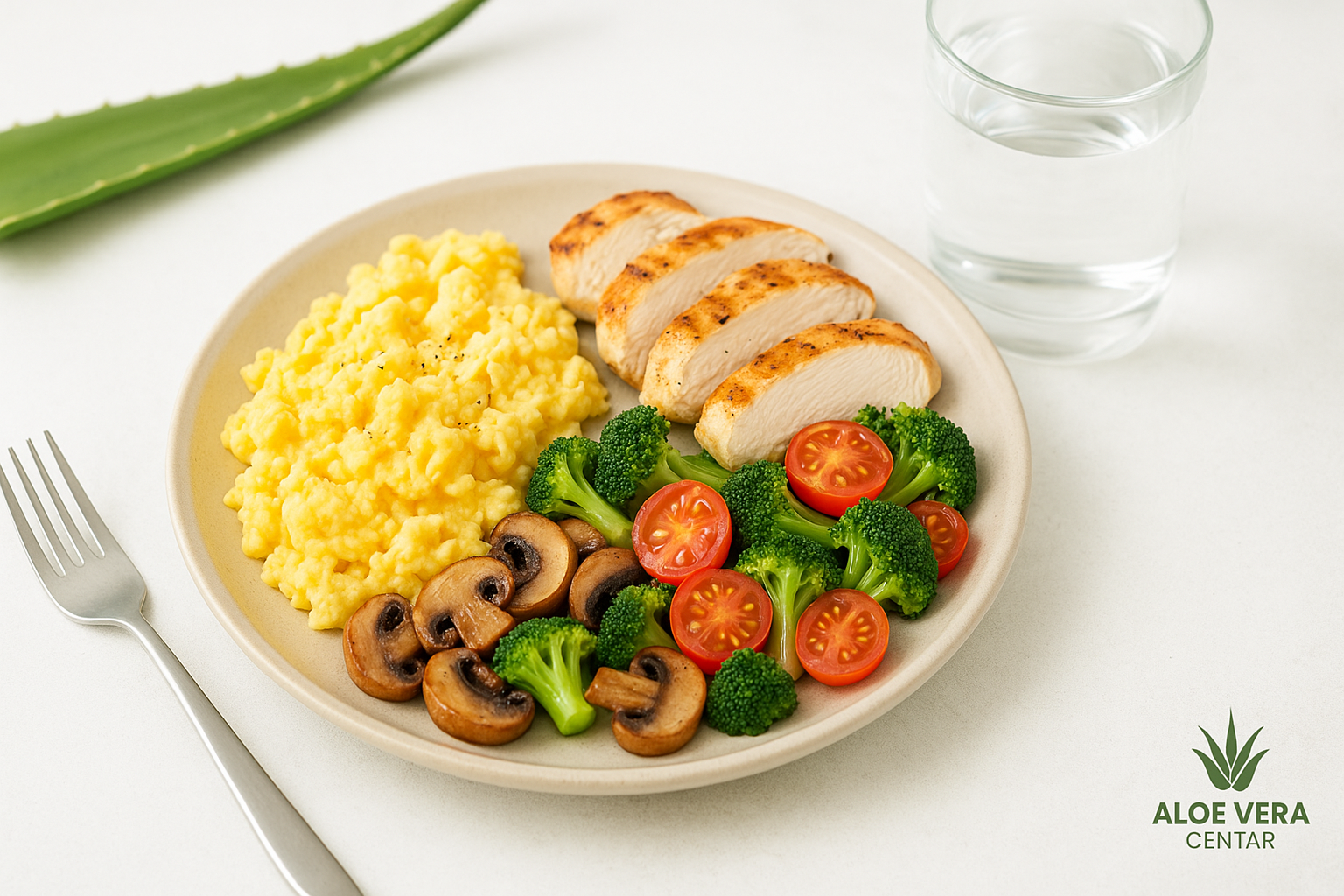
Start from the plate. A simple rule of thumb works well for most adults: half a plate of low-starch vegetables, a quarter a source of protein, a quarter smart carbs with fiber. Add healthy fats for satiety and a more stable glucose curve. What does that mean on the table? Omelet with spinach and tomato, turkey breast and broccoli salad, lentil and vegetable stew, yogurt with chia seeds and blueberries.
Do you need inspiration on how to put together a plate with less starch and more satiety with quick preparation? Take a look at the ideasLow carb meals.
Week 2 - Movement that activates the muscle as a sponge for glucose
Muscles consume the most glucose, so movement is your best ally. It is not necessary to go to the gym every day. Start with 10 to 15 minutes of brisk walking after your main meals. That little trick helps glucose get into the cells, instead of staying elevated for long. Add 2 to 3 short strength training sessions per week and build up gradually.
If you're looking for an easy way to get started and stay consistent, scroll through the guideDaily walk.
Week 3 - Stress, cortisol and quality sleep
Chronic stress and lack of sleep worsen insulin resistance. An evening without a screen, a shorter breathing ritual before bed, a darker and cooler room, and the order of meals make a difference. You might be wondering why? Cortisol raises glucose, and lack of sleep changes appetite hormones, so you reach for sweets more often.
Practical methods and herbal allies are described in the articlestress and cortisol.
Week 4 - Fine-tuning: fiber, layout and small changes
Now you are in rhythm. Add 5 to 10 grams of fiber throughout the day, drink a glass of water before a meal, add protein and fat to a carbohydrate meal, and take a short walk after a meal. Consider a small dose of vinegar with your salad, more leafy greens and whole foods. Small moves, big difference.
Supplements and natural support: what makes sense and when
Supplements are not a magic wand, but they can help when the diet is in place. In consultation with your doctor, consider fiber, omega-3 fatty acids and aloe-based functional drinks. The key is consistency and the choice of proven manufacturers.
For a healthy start to the day and gentle digestion support, many people choose itForever Aloe Vera Gel.
Omega-3 fatty acids are beneficial for heart and brain health and insulin sensitivity. If you don't eat fish regularly, take a lookForever Arctic Sea Omega.
Do you need better satiety and more stable glycemia after a meal with more UGH? Try to increase your fiber intake through vegetables, seeds and as neededForever Fiber.
What does research say about aloe and glycemic control? The available data are encouraging, but moderate: especially in people with early impaired glucose tolerance. For details, seesystematic review on PubMed.
Morning habits that help the whole day
How you start the morning often determines your desire for sweets until the evening. Get up at the same time, drink water, eat a protein breakfast and walk for 10 minutes after breakfast. Add light from a balcony or window to adjust your circadian rhythm. If you are prone to sugar crashes around 11 o'clock, plan a snack rich in protein and fiber.
For additional suggestions of routines that are proven to calm sugar, see the topics aboutinsulin resistance.
Examples of daily menus and rhythms
Example 1 - Office day
- Breakfast: protein omelet with zucchini and feta cheese, a cup of berries.
- Snack: Greek yogurt and a spoonful of ground flax.
- Lunch: chicken salad with olives, cucumber, tomato and a full plate of leafy vegetables.
- Walk: 12 minutes after lunch.
- Dinner: salmon from the oven, boiled broccoli and quinoa in a smaller portion.
Example 2 - Active day
- Breakfast: smoothie made of yogurt, forest fruits and a handful of spinach with oat bran.
- Snack: hard-boiled egg and vegetable sticks.
- Lunch: turkey on a pan, salad of red cabbage, carrots and yogurt dressing.
- Training: 30 minutes of brisk walking or light jogging.
- Dinner: chili made from beans and vegetables with a spoonful of plain yogurt.
Mini rituals that lower glucose after meals
- Order of meals: vegetables first, proteins second, carbohydrates last.
- Walk for 10 to 15 minutes after lunch and dinner.
- A glass of water before a meal and an additional glass 30 minutes after.
- Small plates and planned snacks to avoid overeating.
Common mistakes that raise sugar without you noticing
Juices and smoothies with lots of fruit without protein and fiber they can quickly raise glucose. Add yogurt, protein powder or a handful of seeds.A big plate of pasta in the evening without salad and protein almost guarantees sleepiness after eating.Irregular sleep and late meals disrupt appetite and glucose hormones. And of course,hidden sugars in sauces, muesli bars and drinks.
How to stay motivated and monitor progress
Choose 2 to 3 habits for the next week. Measure your glucose at the same time of day. Write down what you ate, how much you moved, how you slept. You will see patterns. Small successes build momentum. But that's not all... Reward yourself with something non-nutritive: a walk with your favorite music, a bath or a new book.
Need a personalized suggestion of meals, training and daily rituals according to your schedule and goal? Feel freeuse our AI advisor.
What when the plateau comes
If glucose is not coming down as expected, check carbohydrate portions, protein intake per meal, evening snacks and sleep quality. Sometimes it is enough to take 2 short walks after a meal and increase vegetables in lunch. The second time you should add strength training twice a week. Talk to the doctor about the lab and possible deficiencies, eg vitamin D or B12, and adjust the plan.
Prediabetes and realistic expectations
Changes come gradually. Aim for 0.5 to 1 kilogram less per month if you are overweight, 150 to 180 minutes of movement per week and 25 to 35 grams of fiber per day. Each more stable weekly routine brings more insulin-sensitive cells and calmer post-meal sugar. Remember: Will is important, but the system beats the will when the hard days come.
Frequently asked questions
How often should I measure sugar in the prediabetes stage?
It is practical 2 to 3 times a week in the morning on an empty stomach and occasionally 1 to 2 hours after a meal with more carbohydrates. If you have a glucometer or CGM as recommended by your doctor, track the sample over a week, not a single number.
Is bread completely forbidden?
It's not, but choose whole grain options with more fiber, combine with protein and fat, and watch the amounts. A great practice is to eat a rich salad before bread and take a walk after the meal.
Can I skip breakfast?
If skipping leads to later overeating or feeling weak, it is better to introduce a protein breakfast. Some tolerate a shorter feeding window well, but the key is stable glucose, energy and good sleep.
Which plugin is most useful in the beginning?
First set up the plate and motion. Then think about fiber and omega-3. For functional drinks, choose proven brands and keep a diary to objectively assess the effect.
Conclusion
For inspiration on how modern technology and AI are used to build a global online business, read the article"How this couple is building a global business with AI and working 95% online".
Note: This content is for educational purposes and is not a substitute for professional medical advice, diagnosis or treatment. Consult your doctor or qualified professional for personalized recommendations.
Products most closely related to this topic
If you want to compare concrete options after reading, these products are the closest match to the article topic.
Aloe Vera GelA daily aloe drink for people who want simple support for digestion and routine.
It makes sense if you are looking at the topic through digestion and a simpler daily routine.Arctic Sea OmegaA supplement for energy, heart and circulation routines when you want longer-term daily support.
Useful to compare when you are looking for energy, focus or vitality support.Forever Fiber - FIBERA simple fiber add-on when you want digestion and satiety support during the day.
It fits topics such as appetite, portions, energy or a weight-management routine.Short answers that help
If you are still comparing options, these are the points worth checking before you continue.
What should I take from this article?
Use it to understand the topic in practical terms and compare it with your current routine, needs and next step.
When does it make sense to ask for a recommendation?
Ask when the topic feels relevant, but you are not sure which Forever Living Products product or routine fits you best.
Does this article replace professional advice?
Prediabetes under control: a natural diet plan and exercise is educational content. For medical conditions, medication, pregnancy or persistent symptoms, include qualified professional advice.
Describe what you want to achieve
If you do not know which product to choose, write your goal, habits or doubts and get a more concrete suggestion.
Recommended products



Related articles to keep exploring