
The key points from this article
- Social anxiety isn't just nervousness before a presentation or a new situation that makes you a little "squeamish".
- It's a state where almost every interaction feels like a test in front of an audience that judges you harshly.
- For a personal choice, continue with a recommendation after reading.
Products most closely related to this topic
If you want to compare concrete options after reading, these products are the closest match to the article topic.
 Arctic Sea Omega
A supplement for energy, heart and circulation routines when you want longer-term daily support.
Useful to compare when you are looking for energy, focus or vitality support. Forever Argi+
A supplement for energy, heart and circulation routines when you want longer-term daily support.
Useful to compare when you are looking for energy, focus or vitality support.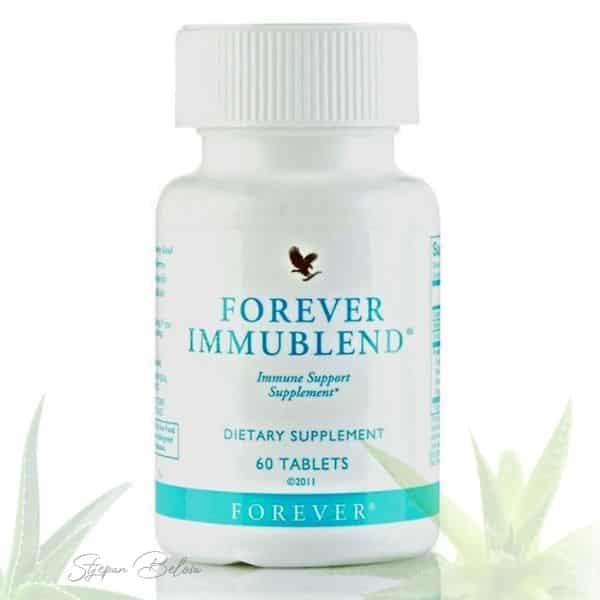 Forever Immublend
Daily vitamin support when you want a steadier immunity, energy or nutrition routine.
Connected with daily support for immunity, energy or baseline nutrition.Social anxiety and small steps of exposure: understandable and concrete
Social anxiety isn't just nervousness before a presentation or a new situation that makes you a little"squeamish".
It's a state where almost every interaction feels like a test in front of an audience that judges you harshly.
It may sound excessive on paper, but in real life this is felt by a large number of people.
Maybe you too.
Maybe you avoid invitations for coffee, business meetings or a simple phone call.
Maybe your heart is pounding when you need to say something in a larger company.
Or the very thought of meeting new people throws you off balance.
The good news is that there is a concrete, practical approach that doesn't require perfect courage right away.
It's about small, deliberate steps of exposure.
In this article, I guide you through that process so that it is safe, understandable and doable.
What is social anxiety and how to recognize it
Social anxiety is the fear of being judged, criticized or rejected in social situations.
It is not an ordinary shyness that subsides after a few minutes of conversation.
This is about fear that can block an entire day or week.
The most common signs of social anxiety are:
- Intensive care before a meeting, meeting or call.
- Physical symptoms such as a racing heart, flushing, sweating or trembling hands.
- Obsessively analyzing the conversation after the meeting.
- Avoiding situations that involve other people focusing on you.
Research shows that social anxiety is one of the more common anxiety disorders in adulthood.
It often occurs together with depression or other forms of anxiety.
Maybe you recognize yourself in these descriptions, and maybe for years you thought you were just"oversensitive".
Why avoidance helps in the short term but makes the problem worse in the long term
When a situation scares you, the most logical move is to avoid it.
In the short term, that seems like a relief.
The heart calms down, the palms become dry and you tell yourself that it's a good thing you didn't go.
But there is a trap.
Every time you avoid a situation, you send a message to your brain that it is dangerous.
The result is a vicious circle.
The more you avoid, the more situations fall into the"I can't"category.
Over time, the space in which you feel safe shrinks.
That is why the goal of treatment is exactly the opposite of avoidance.
Small steps of exposition: why this approach makes sense
Exposure means that you consciously face situations that scare you.
Not to torture yourself, but to give your brain a chance to learn a new message.
That message reads"this is annoying, but not dangerous".
Gradual, structured exposure gives the best results.
This is an approach often used in cognitive behavioral therapy for social anxiety.
Instead of giving a big lecture right away, start with smaller challenges.
This approach provides two key benefits.
First, build confidence based on real experiences.
Second, your brain receives repeated evidence that fear does not have to lead to a catastrophic outcome.
What is the hierarchy of fear and how to use it
The fear hierarchy is a simple list of situations that scare you.
They are ordered from the easiest to the hardest.
In this way, you see that the problem is not one huge wall, but a series of stairs.
An example of a hierarchy for social anxiety might look like this:
- Send a short message to a friend you haven't heard from in a long time.
- Ask a simple question to a colleague at work.
- Call for a short meeting via video call and turn on the camera.
- Go for coffee with a person you barely know.
- Express your opinion in a small office meeting.
- Give a short presentation in front of a small group of people.
Each person has their own list.
It is important that it is honest and specific.
You may find it easier to send a text than to make a phone call.
It may be more difficult for you to sit down in a group of five people than to give an online presentation.
How to make your hierarchy step by step
Step 1: Choose one clear situation
Instead of saying"I'm afraid of people", narrow your focus.
For example:"I'm afraid to answer a meeting"or"I'm afraid to ask someone for coffee".
The more specific the description, the easier it is to break it down into smaller parts.
Step 2: Write all the variants of that situation
You take a paper or a notebook and write all versions of the situation.
From the easiest to the hardest, without censorship.
For example for meetings:
- Just be present at the online meeting and stay until the end.
- Say one short sentence like"I agree with the proposal".
- Ask a short question.
- Present one idea in two or three sentences.
- Lead part of the meeting for a few minutes.
Step 3: Rate the level of fear for each task
Rate each task with a number from 0 to 100.
Where 0 means"doesn't scare me at all"and 100 means"almost unbearable".
These ratings are not"scientific", but they help.
They help you see where you really stand and which steps to choose first.
Step 4: Start with easier tasks
Start with situations that have a moderate level of fear.
For example, between 30 and 50.
You do not start from the most difficult step, but build the muscle of courage.
A similar principle is used by many professional exposure guidelines.
Step 5: Repeat the exposure until the anxiety subsides
The key is not in one attempt, but in repetition.
You repeat the situation until your fear drops at least a few degrees.
Only then do you move on to the next step.
It's important not to pull back as soon as the feeling of anxiety arises.
Your brain learns exactly when you stay in a situation even though it is unpleasant.
How to support the body while working on social anxiety
Body and emotions are tightly connected.
When you're exhausted, hungry, or sleep-deprived, anxiety often rises.
That is why it is useful to strengthen the physical side in parallel.
Pay attention to several areas:
- A dream that is as regular as possible.
- A diet that does not raise sugar suddenly and does not destroy energy.
- Mild daily activity, if possible in the fresh air.
Some people notice that their concentration and focus increase when they get enough omega 3.
A quality supplement such asForever Arctic Sea Omega, of course with expert advice.
Targeted supplements for focus and attention help some with demanding mental tasks.
It can be mentioned as an exampleForever Focus, noting that you always monitor your own body's reaction.
It is important to understand that supplements do not solve social anxiety alone.
They can be supportive as you make real change through exposure and new habits.
Evening anxiety, the mind and the screen: how to ease the day after exposure
After a small step of exposure, the brain often"plays the movie"all evening.
That's normal.
But if you stay on the screen for a long time, sleep becomes more easily disturbed.
You can read more about this topic in the articleInsomnia and late screens.
There you will find practical steps to help calm the nervous system before bed.
A short evening routine without a screen helps, even if it lasts ten minutes.
An example of such a mini break is described in the textThe power of silence.
Such moments restore a sense of control, which social anxiety often takes away.
Working on thoughts: what you say to yourself before and after the presentation
Social anxiety is not just a feeling in the body.
It is also a set of automatic thoughts that convince you that you are not good enough.
Examples of such thoughts are"I must sound stupid"or"everyone will notice that I'm shaking."
It is helpful to capture these thoughts and write them down.
Then you can review them.
For example, asking"what is the evidence for this"or"what would I say to a friend in the same situation".
The development of self-awareness and emotion regulation skills goes hand in hand with this process.
You can read more about this topic in the articleemotional intelligence.
How to use AI and structured guides to support
Some people find it easier to get started when they have a guided step-by-step feeling.
Structured online guides and smart tools can help you here.
If you want ideas on how to combine natural supplements, nutrition and routines with your own exposure steps, you canuse our AI advisor.
It does not replace professional help, but can provide orientation and suggestions for questions for a doctor or therapist.
When you decide to add certain extras to your plan, it's a good idea not to overpay.
When it's time for professional help
Small steps of exposure can be very helpful, but they are not always enough on their own.
The time to talk to a doctor or psychotherapist is when:
- Social anxiety seriously interferes with work or relationships.
- You begin to avoid almost all situations outside the home.
- Thoughts of worthlessness or hopelessness appear.
- You think it would be easier if you weren't there.
If you have thoughts of self-harm or suicide, you should seek help immediately.
Contact your country's emergency services, ambulance or crisis hotline.
Social anxiety therapy, especially with elements of exposure, has very good researched efficacy.
Frequently asked questions
Is social anxiety the same as shyness?
No.
Shyness is a trait that often diminishes when you get used to socializing.
Social anxiety is stronger and longer lasting.
It can severely limit work, relationships and daily activities.
Do I have to go straight to the hardest situation to progress?
You don't have to.
The idea of small steps is to go gradually but consistently.
Start with easier situations and slowly build up to more difficult ones.
This reduces the risk of giving up and strengthens self-confidence.
How often do I need to be exposed to see changes?
It is better more often with smaller steps, than rarely with big challenges.
An example could be several small exposures per week.
It is important that you record what you did and how you felt before and after.
Can I use sedation supplements along with these steps?
Partly yes, but always with the advice of a doctor or pharmacist.
Supplements may support sleep, focus, or general health, but they do not change the cause of anxiety.
The main tool remains the steps of presentation and work on thoughts.
Bottom line: small, consistent steps can make a big difference
Social anxiety can seem like an insurmountable mountain.
But when you break that climb down into small, clear steps, the story changes.
You are no longer a person who runs away from every situation.
You become the person who chooses how to gradually expose and grow.
With a hierarchy of steps, better body care, screen-free rituals and work on thoughts, progress is very possible.
If necessary, add expert support and quality plugins that work for you.
You can find more inspiration on how to build habits and inner strength in many texts on the Aloe Vera Center portal.
For additional motivation, see the stories of people who combine health, routines and a modern approach to work.
For inspiration on how modern technology and AI are used to build a global online business, read the article"How this couple is building a global business with AI and working 95% online".
Note: This article serves as educational support and is not a substitute for professional medical advice.
If you are experiencing severe symptoms of anxiety, depression or other conditions, please contact your doctor or a qualified mental health professional.
Products most closely related to this topic
If you want to compare concrete options after reading, these products are the closest match to the article topic.
Arctic Sea OmegaA supplement for energy, heart and circulation routines when you want longer-term daily support.
Useful to compare when you are looking for energy, focus or vitality support.Forever Argi+A supplement for energy, heart and circulation routines when you want longer-term daily support.
Useful to compare when you are looking for energy, focus or vitality support.Forever ImmublendDaily vitamin support when you want a steadier immunity, energy or nutrition routine.
Connected with daily support for immunity, energy or baseline nutrition.Short answers that help
If you are still comparing options, these are the points worth checking before you continue.
What should I take from this article?
Use it to understand the topic in practical terms and compare it with your current routine, needs and next step.
When does it make sense to ask for a recommendation?
Ask when the topic feels relevant, but you are not sure which Forever Living Products product or routine fits you best.
Does this article replace professional advice?
Social anxiety and small steps of exposure for a braver life is educational content. For medical conditions, medication, pregnancy or persistent symptoms, include qualified professional advice.
Describe what you want to achieve
If you do not know which product to choose, write your goal, habits or doubts and get a more concrete suggestion.
Recommended products


Related articles to keep exploring