The key points from this article
- Pilates at home without props: the most common mistakes and how to correct them Pilates at home can be the best habit you ever introduce.
- It can also be a source of frustration.
- For a personal choice, continue with a recommendation after reading.
Products most closely related to this topic
If you want to compare concrete options after reading, these products are the closest match to the article topic.
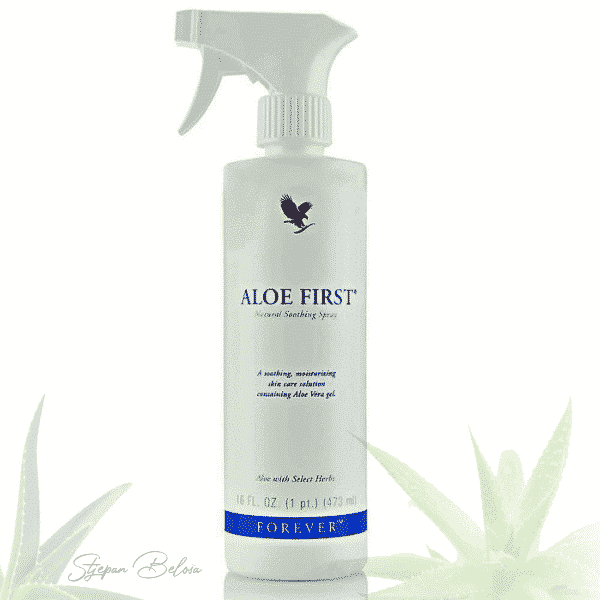 Aloe First – First aid for the skin with Aloe vera and propolis
A practical outer-care product when the goal is skin comfort and a simpler care routine.
Closest to a care routine for skin, hair or everyday personal care.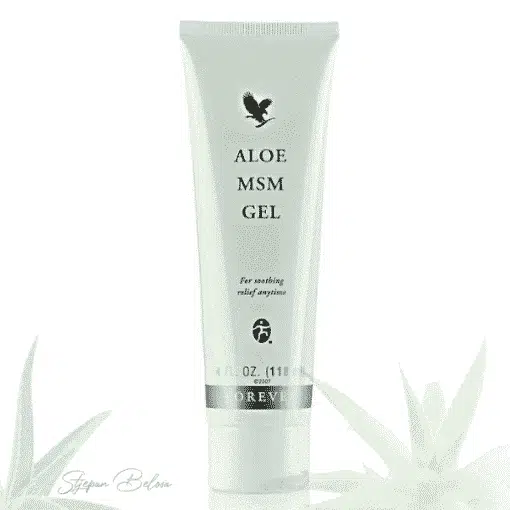 Aloe MSM Gel
A practical outer-care product when the goal is skin comfort and a simpler care routine.
Closest to a care routine for skin, hair or everyday personal care. Arctic Sea Omega
A supplement for energy, heart and circulation routines when you want longer-term daily support.
Useful to compare when you are looking for energy, focus or vitality support.Pilates at home without props: the most common mistakes and how to correct them
Pilates at home can be the best habit you ever introduce. It can also be a source of frustration. One small mistake often spoils the whole feeling of movement. Then you exercise and the body doesn't feel better. Sound familiar? Here's the thing: Pilates is not a competition. It's not a quick workout either. It is a method that demands attention. When you get it, you get results. No props, no crowds, no excuses. In this guide, we go through the most common mistakes. I show you how to recognize them. You also get clear corrections that you can apply immediately. The goal is simple: safe home Pilates that builds strength and peace in the body.Before you go: set yourself up for success
Home Pilates succeeds when the environment works for you. You don't need a studio. You need some space and a clear routine. It is the foundation that reduces mistakes.Minimal equipment worth its weight in gold
- Non-slip mat or carpet.
- A towel to support the head or knees.
- A bottle of water.
- Clock or timer.
Set up the camera or mirror, but smartly
If you're watching a video, keep the screen at eye level. Then you bend your neck less. If you have a mirror, use it briefly. Don't look at him the whole training. The feeling inside is more important. If you sit a lot, check your work setup. Bad posture enters Pilates and creates wrong patterns. Here is a helpful guide to ergonomics.The golden rule of Pilates: quality over quantity
You may be wondering why this is so important. Because Pilates teaches the body stability. Stability is quiet strength. It protects the joints and the spine. And it makes you look"upright"without forcing it. The most common problem at home is speed. People skip preparation and rush through reps. Then they take over the neck, shoulders or lower back. Pilates should ease, not tighten.Mistake 1: Holding your breath or shallow breathing
Many unconsciously hold their breath when they are having a hard time. Then the body stiffens. The movement becomes a"struggle". And the tension moves to the neck and shoulders.How to correct
- Breathe in through your nose, spreading your ribs to the side.
- Exhale through your mouth, as if fogging the glass.
- On exhalation you make effort, on inhale you prepare.
Mistake 2:"Belly out"and sagging in the lower back
This is the most expensive mistake. The abdomen relaxes, the ribs rise, and the back bends too much. Then Pilates stops being Pilates. It becomes compensation.How to correct
- Imagine you are buttoning tight pants.
- Gently pull the navel towards the spine.
- Keep the ribs"softly down".
- Keep the pelvis neutral, without squeezing the buttocks.
Mistake 3: The neck works instead of the stomach
Head and torso lifts often pull the neck. Beard moves forward. Shoulders rise. After that, you have pain behind the neck or in the trapezium.How to correct
- Imagine holding a tangerine under your chin.
- Look at the thighs, not the ceiling.
- Relax your tongue, don't clench your teeth.
Mistake 4: The shoulders are in the ears
This happens in planks and exercises on all fours. Shoulders rise towards ears. The blade loses its stability. Then the shoulder joint suffers.How to correct
- Lower your shoulders"away from your ears".
- Let the shoulder blades slide down the back.
- "Screw"your palm into the floor, without clenching your fingers.
Mistake 5: Too much range of motion
At home, you often want"more". More legs, more twists, more stretches. But greater range without control is not progress. That's the way to overexertion.How to correct
- Reduce the range until you have full control.
- The movement should be quiet and smooth.
- Stop before the form is lost.
Mistake 6: Speed that wipes out technique
Pilates looks easy when done by someone skilled. That's why people speed up. Acceleration hides weaknesses. But also strengthen them. The body remembers the wrong way.How to correct
- Count 3 seconds up and 3 seconds down.
- Do fewer reps, but perfect.
- Introduce a one-second pause at the “hard point”.
Error 7: Improper position of the pelvis
In some exercises, the pelvis"runs away". Or too much understatement. Or arch your back too much. Both reduce stability. And it changes the work of the muscles.How to correct
- Think of the bowl as a container of water.
- You don't want to spill water either forward or backward.
- In the neutral position, you have a feeling of width in the lower back.
Error 8: Knees and feet"escape"from the line
In a squat, bridge or lunge, the knees can go inwards. The foot can turn. Then the hips and knees work at a bad angle. This can cause discomfort.How to correct
- Keep your feet hip-width apart.
- The weight goes to the heel and the base of the big toe.
- The knee follows the direction of the second toe.
Mistake 9: Skipping the warm-up and cool-down
Home training often starts"immediately". That's a mistake. The body needs a transition. This is how you reduce stiffness. This is how you increase the quality of movement.How to correct
- 2 minutes of breathing in a lying position.
- 1 minute of circling shoulders and hips.
- 1 minute of spinal mobility on all fours.
Mistake 10:"If it burns, it works"mentality
Pilates can"burn"in the muscle. That's normal. But joint pain is not normal. Sharp pain is not normal. Tingling is not normal.How to correct
- Stop the exercise if a sharp pain occurs.
- Reduce the range and change the position.
- Choose the variant on the knees or with support.
Mini correction protocol: 5 questions for each exercise
This is your home"filter"for technique. Ask yourself these questions before each set. The answers bring you back to quality.- Am I breathing calmly and rhythmically?
- Are the ribs set soft?
- Do I feel a stable center without spasms?
- Are the shoulders far from the ears?
- Can I slow down a little more?
How to do 20 minutes of Pilates without props
This schedule is simple and realistic. Don't look for a perfect day. He's only looking for 20 minutes. If you have less time, shorten the number of exercises.1) Activation and breathing (4 minutes)
- Lying breathing into the ribs.
- A slight tilt of the pelvis forward and backward.
- Cat-cow on all fours.
2) Center and control (8 minutes)
- Dead bug variant with one leg.
- A bridge with a break on top.
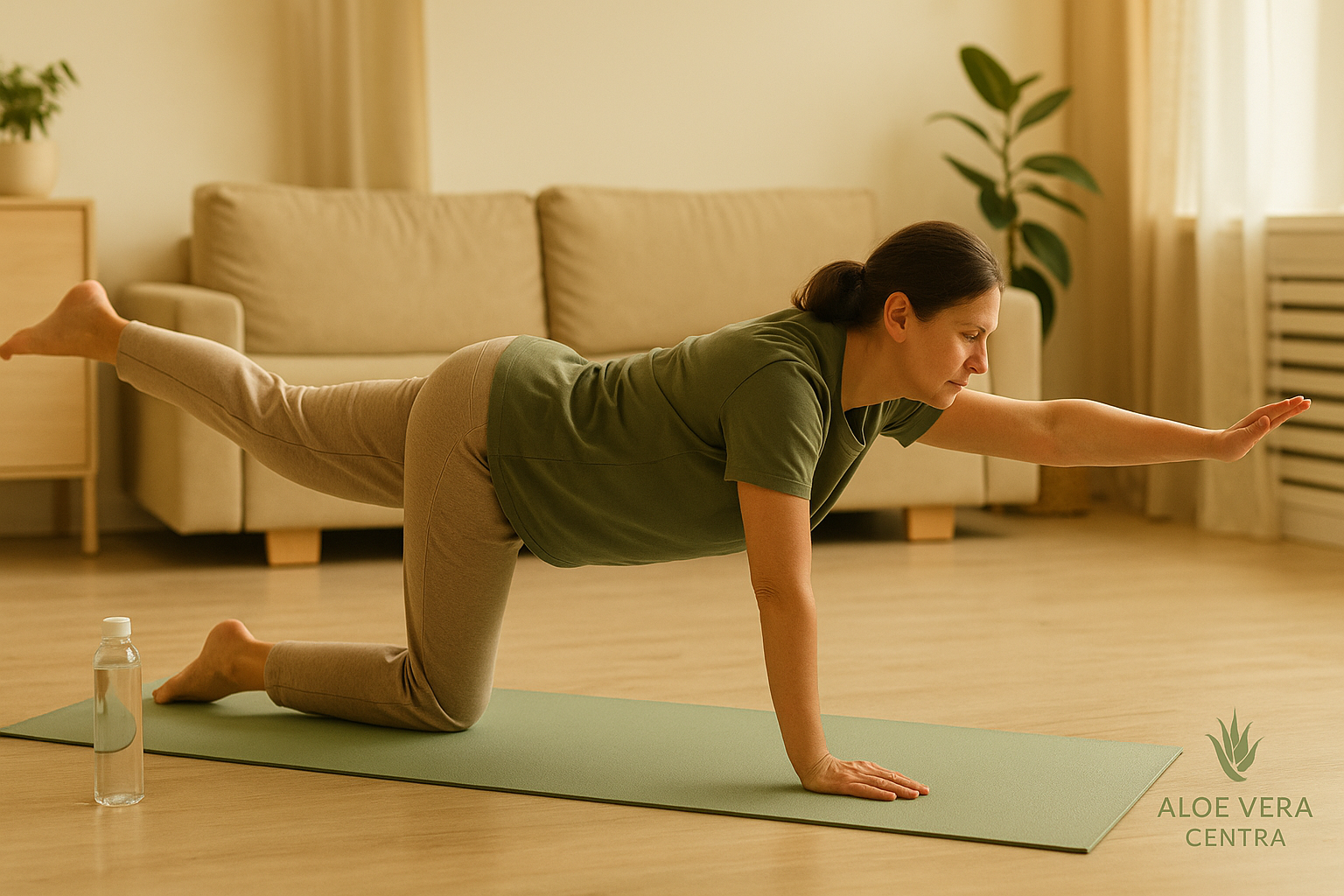
- Bird dog at a slow pace.
3) Stability and posture (6 minutes)
- Side plank on the knees.
- Side leg lift in a lying position.
- Wall sit or slow wall squat.
4) Calming down (2 minutes)
- Hip and chest stretching.
- Slow three series of inhalation-exhalation.
Where Aloe vera and Forever products can fit into the home routine
After Pilates, skin and muscles often like simple care. If you have sensitivity or a feeling of tightness, some people find it helpful to use a topical gel treatment. In this context, some people choose Aloe MSM Gel. If you are building a long-term health routine along with training, omega-3 fatty acids are often mentioned. They are interesting because of their general role in the body. Some fit them through Forever Arctic Sea Omega, with diet and agreement with the doctor.What the research says about Pilates
Pilates is often studied in the context of function and back pain. A recent meta-analysis described a reduction in pain and functional limitation in low back pain. Read the summary through scientific paper on PubMed about the effectiveness of pilates for low back pain. For the bigger picture, it's helpful to understand what Pilates aims for and how it's typically performed. It provides a comprehensive explanation WebMD's guide to what Pilates is.When you need quick help choosing a routine
If you are not sure what is for you, you can start with simple questions. How much time do you have? Do you have pain or limitations? What is your goal: posture, strength or mobility? For quick orientation you can use i AI advisors. It is enough to describe the situation and habits. Then you choose a direction that is realistic for you.Frequently asked questions
How many times a week does it make sense to do Pilates at home?
For most people, a good start is 2 to 3 times a week. Each training can last 15 to 30 minutes. Consistency is more important than duration.What if I feel pain in my lower back during the exercises?
First, reduce your range of motion and slow down. Check breathing and rib position. If pain persists or is severe, discontinue and seek professional advice.Can I do Pilates if I'm a beginner and have stiff hips?
You can, but choose basic variants. Do more mobility and shorter sets. In stiffness, speed is often the problem, not lack of will.Do I need an underlay or can I use carpet?
You can also go on the carpet if it is not slippery. The pad often protects the knees and elbows. It also gives a better sense of stability.Bottom line: correct two mistakes and you've already won
If you take only two things from this article, let them be these. Breathe calmly. And slow down the movement. This immediately reduces tension in the neck and back. Choose three exercises and do them for 14 days. Track how you feel after training. Your body is always giving you feedback. It just needs to be heard. If you want to incorporate products into your routine, do it discreetly and smartly. It is best to start with verified needs. If it suits you, you can place an order with 15% discount. For inspiration on how modern technology and AI are used to build a global online business, read the article "How this couple is building a global business with AI and working 95% online". Note: This article is for informational and educational purposes. It does not replace a medical examination or an individual therapy plan. If you have serious pain, neurological symptoms or chronic diagnoses, consult a doctor or physical therapist.Products most closely related to this topic
If you want to compare concrete options after reading, these products are the closest match to the article topic.
Aloe First – First aid for the skin with Aloe vera and propolisA practical outer-care product when the goal is skin comfort and a simpler care routine.
Closest to a care routine for skin, hair or everyday personal care.Aloe MSM GelA practical outer-care product when the goal is skin comfort and a simpler care routine.
Closest to a care routine for skin, hair or everyday personal care.Arctic Sea OmegaA supplement for energy, heart and circulation routines when you want longer-term daily support.
Useful to compare when you are looking for energy, focus or vitality support.Short answers that help
If you are still comparing options, these are the points worth checking before you continue.
What should I take from this article?
Use it to understand the topic in practical terms and compare it with your current routine, needs and next step.
When does it make sense to ask for a recommendation?
Ask when the topic feels relevant, but you are not sure which Forever Living Products product or routine fits you best.
Does this article replace professional advice?
Pilates at home without props: mistakes and quick corrections is educational content. For medical conditions, medication, pregnancy or persistent symptoms, include qualified professional advice.
Describe what you want to achieve
If you do not know which product to choose, write your goal, habits or doubts and get a more concrete suggestion.
Recommended products
Related articles to keep exploring