
The key points from this article
- Insomnia and late-night screens go hand in hand for many adults today.
- Maybe you spend your last waking minutes on your cell phone, scrolling through social networks or replying to messages.
- For a personal choice, continue with a recommendation after reading.
Products most closely related to this topic
If you want to compare concrete options after reading, these products are the closest match to the article topic.
 Arctic Sea Omega
A supplement for energy, heart and circulation routines when you want longer-term daily support.
Useful to compare when you are looking for energy, focus or vitality support. Aloe Blossom Herbal Tea
A caffeine-free herbal tea for a calmer daily ritual, hot or cold.
A good comparison if you want natural daily support and a calmer ritual. Forever Argi+
A supplement for energy, heart and circulation routines when you want longer-term daily support.
Useful to compare when you are looking for energy, focus or vitality support.Insomnia and late-night screens: a quick guide to a better day
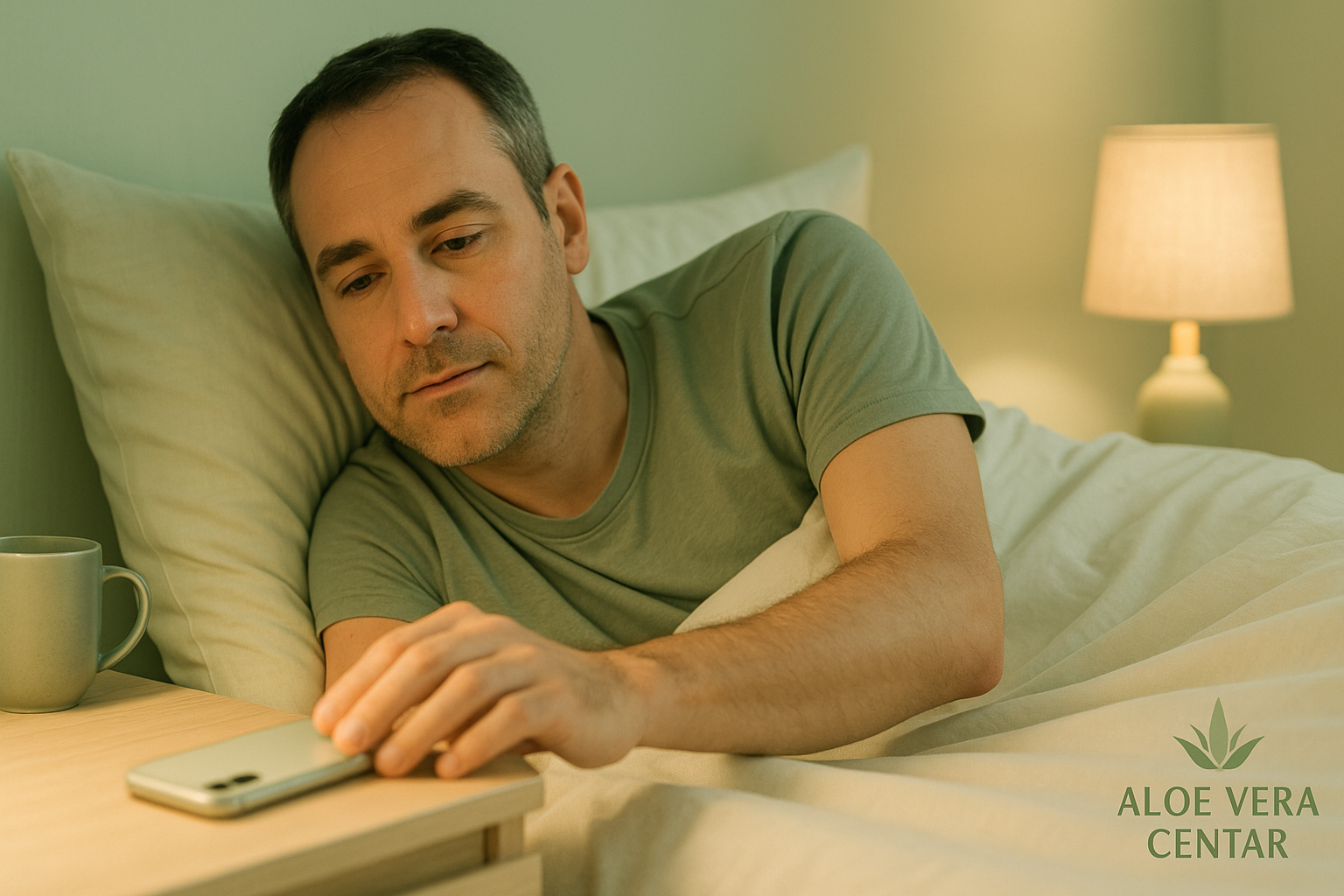
Insomnia and late-night screens go hand in hand for many adults today. Maybe you spend your last waking minutes on your cell phone, scrolling through social networks or replying to messages. The eyes are heavy, but the brain is still in fifth gear. You wake up tired in the morning, and the day goes wrong even before the first coffee.
You may be wondering why this is happening to you. It's not just a matter of willpower. The combination of light, content and habit slowly"programs"your nervous system. The good news is that this program can be rewritten. This guide will show you how to reduce the impact of screens on sleep and wake up more rested, without radical sacrifices.
Why late-night screens disrupt sleep
Late-night screens affect your biological clock on multiple levels. The first is light. Screens emit a lot of blue spectrum that sends a message to the brain that it's still day. The second is the content you watch. News, emails or tense videos raise adrenaline and cortisol. The third is routine. If you fall asleep with your cell phone in your hand every day, the brain creates a pattern that becomes automatic.
Blue light in the evening reduces the secretion of melatonin. It is the hormone that tells the body that it is time to sleep. When there is less melatonin, it takes longer to fall asleep, and the sleep becomes shallower.
It's not just the light that's the problem. The content you consume is often emotionally charged. You read emails from work, follow the news or look at other people's ideal lives. The brain perceives all this as a potential threat. The"fight or flight"reaction is activated. Then it is difficult for the body to switch to a calmer, parasympathetic mode necessary for good sleep.
How to recognize that screens are ruining your sleep
Some signs are obvious. It's hard to fall asleep even though you're tired. Wake up several times during the night. You feel broken in the morning and need more coffee than before. But there are more subtle signals that are worth paying attention to.
- Your head"buzzes"with thoughts as soon as you lie down in bed.
- You have a feeling of inner nervousness for no apparent reason.
- You often delay going to sleep because of another video or scrolling.
- In the morning you have fog in your head and slower focus.
- In the afternoon, you have strong cravings for sweet or fast food.
These are typical indicators of an unbalanced nervous system. They are often associated with a higher level of anxiety and tension. If you recognized yourself, the good news is that you don't need a perfect screen-free life. A few clear boundaries and simple rituals are enough.
What research says about insomnia and screens
Numerous studies link evening viewing of screens with poorer sleep quality. Studies show that exposure to blue light in the hours before bed can delay the secretion of melatonin and delay the time you fall asleep. One review of sleep habits shows that even an hour of screen time in bed significantly increases the risk of insomnia. A summary of such findings is available atHealthline article on screen time and risk of insomnia.
Some recent research points to the importance of the content you watch before going to bed. It is not the same to read a light novel on an e-reader or to follow a tense discussion on a social network. Emotionally disturbing content further activates the brain. This can increase anxiety and increase the time it takes to relax.
Experts increasingly emphasize the role of long-term habits. If you go to bed with your cell phone for years, the brain associates bed with activity, not rest. That is why chronic insomnia develops. In such cases, a combination of sleep hygiene and targeted psychological techniques gives the best results. Quick evening protocol for less insomnia
Here's the thing. You don't need a perfect hour-long routine every night. It's more important that you have a few clear steps that you can follow most days. Let's see what a simple protocol might look like.
1. An hour before bed: set a screen limit
About an hour before you plan to go to bed, set a"screen limit"rule. This means that after that time you no longer check emails or social networks. You can turn on the night mode, reduce the brightness and put the device away from the bed.
This is the moment when you can choose a quiet walk around the apartment, light stretching or short guided breathing instead of scrolling. If you know that your anxiety increases in the evening, it is useful to read the practical tips from the article such asanxiety and sleep. This will make it easier for you to understand what is happening in your body.
2. Thirty minutes before going to bed: calm down your body
Slowly dim the lights in the apartment. Warm bulbs, dimmed lights and fewer screens send a signal to the brain that the day is coming to an end. Choose a relaxing activity that suits you. It can be a warm foot bath, writing a short journal or reading a light book.
A small evening routine with a hot drink without caffeine also helps many. One option is a mild herbal mixture like teaAloe Blossom Herbal Tea. A warm drink with a calmer atmosphere can send a clear message to the body that it's time to rest.
3. Five minutes before sleep: reset for the brain
Before turning off the light, do a short mental reset. Sit on the edge of the bed and take three slow breaths through your nose. Then exhale with a longer exhalation through the mouth. This breathing rhythm calms the nervous system. The brain receives a signal that there are no more urgent tasks.
If your thoughts are still flying, grab a notebook. Write down the three most important things you need to solve tomorrow. Then add one small habit to support your dream tomorrow. For example, taking a short walk after lunch or turning off the TV earlier.
What if you wake up in the middle of the night
It happens to everyone. You are awakened by a thought, a noise or an unusual dream. The first reaction is often to reach for the mobile phone. This is exactly what further perpetuates insomnia. The goal is to return the body to a state of safety without new stimuli.
If you can't fall asleep for more than twenty minutes, get out of bed. Stay in semi-darkness and choose a calming activity. You can read a book, do light stretches or focus on breathing. When you feel sleepy again, go back to bed.
It is important that the bed remains associated with sleep and intimacy. Not with nervous scrolling and solving tasks. Experts often advise a similar approach as part of cognitive behavioral techniques for insomnia. The idea is simple. The body needs to learn that the bed is a signal to rest.
How day affects night
Better sleep doesn't start at night. It starts with your first steps in the morning. If you spend the day under constant stress, eat quickly and do not go out into natural light, the body is constantly in"emergency"mode. In the evening it is difficult to relax then, even without a screen.
Small but consistent habits help. A short morning walk in the daylight. Regular meals with enough protein and vegetables. Short oneswellness breaks during the working day in which you consciously separate yourself from the screen. These small steps reduce the overall level of tension.
There is also the issue of social networks. If you spend most of your free time scrolling, the brain is constantly exposed to a fast rhythm of stimuli. It is useful to be aware from time to timesocial network detox. This is how you regain a sense of control over your time and attention.
The role of nutrition and supplements in insomnia
Nutrition and supplements are not a magic wand, but they can be a powerful support. Stable blood sugar throughout the day helps you feel calmer in the evening. Too much sugar, alcohol or late heavy meals can increase night awakenings and restless sleep.
Of supplements, magnesium, omega 3 fatty acids and B group vitamins are often mentioned. Omega 3 contributes to the health of the brain and nervous system. One of the possibilities is a quality product rich in EPA and DHA fatty acids such asForever Arctic Sea Omega. It is important, of course, to adjust the intake to your needs and agree with a doctor or nutritionist.
If you're considering a broader plan of supplements and sleep support, a personalized approach can help. Instead of buying products at random, it is better to first assess your habits, diet and general health. Our smart can help you with thatAI advisors which connects your needs with specific recommendations.
Little evening routine with aloe vera
Aloe vera can be part of a soothing bedtime routine. Her gel is traditionally used for skin care, but also as part of a wider wellness approach. It is not a cure for insomnia, but a ritual that sends a message of safety to the body and brain.
An example of such a routine looks like this. After showering, apply a light cream or gel with aloe vera on the skin. Then prepare a warm cup of herbal tea. The pleasant temperature, smells and feeling of care on the skin help the body to slow down. If you'd like to further explore how aloe can support general health, it's helpful to check out articles on the topic such asantioxidant properties of aloe.
Once you discover products and habits that work for you, it's important to introduce them gradually. You don't need to change everything overnight. Focus on one or two habits that you are willing to practice most days. With consistency, even small rituals have a big effect on sleep quality.
When to seek professional help
It is worth contacting a doctor or a sleep specialist if insomnia lasts longer than a month. Especially if it affects work, relationships and general mood. Chronic insomnia often goes hand in hand with anxiety or depression. In such situations, expert support makes a big difference.
Many insomnia guidelines emphasize the importance of cognitive behavioral therapy for sleep. It helps identify patterns of thought and behavior that perpetuate insomnia. He then guides you through the specific steps of change. It is often combined with the simple rules of sleep hygiene that you have learned in this article.
It is also important to discuss all medications and supplements you are taking with your doctor. Some of them can affect sleep. Together you can choose a strategy that is safe and sustainable for you. Don't be afraid to ask for a second opinion if you feel you haven't found a solution yet.
How to connect a better sleep and a better day
When you sleep better, the whole day looks different. You have more patience with people. You can handle stress at work more easily. You make decisions faster and have more energy for family and hobbies. A dream is often the first brick in the wall of a good life, even though we take it for granted.
It is good to see sleep as a habit and not as a lottery. This means you don't wait for perfect circumstances. Rather, build small routines that support your biological clock. Along with screen limits, diet and movement, the way you manage your time and focus also plays an important role.
Frequently asked questions
How long before bed should I turn off the screens?
Most people find it helpful to turn off their screens about an hour before bed. Thirty minutes is enough for some, if they choose peaceful activities. Experiment and see how you feel in the morning.
Can he sometimes fall asleep with a series or a movie?
Nothing terrible happens if it happens occasionally. The problem arises when it's the only way you get to sleep. Then the brain associates sleep with strong stimuli. The goal is to have at least a short screen-free period before bed most nights.
Do night modes and blue light filters help?
Night modes and filters can reduce some of the impact of blue light. However, they do not solve the problem of content and emotional stimulation. The best results are obtained by a combination of filters, reduced brightness and clear boundaries when the devices go from the side.
Should I take nutritional supplements if I have insomnia?
Add-ons should be seen as support, not as a basic solution. The first step is sleep habits, movement and stress management. If you still have difficulties after that, talk to your doctor or nutritionist about possible supplements.
Bottom line: small steps for a quieter night and a more productive day
Insomnia and late-night screens don't have to be your new standard. With a few clear boundaries, calming evening rituals, and a little more awareness, you can make a big difference. You don't need a perfect plan. It is enough to choose one small step tonight that you can stick to.
Decide what time you turn off the screens tonight. Add a short routine with a hot drink and a few minutes of silence. If you want extra support, explore quality supplements and a body-soothing nutrition plan. So every night you build a better day to come.
Note: This text is for general information and does not replace the advice of a doctor or other health professional. Always consult your doctor for diagnosis and treatment. For inspiration about modern technology and AI in building a global online business, see an inspiring example. Read the article"How this couple is building a global business with AI and working 95% online".
Products most closely related to this topic
If you want to compare concrete options after reading, these products are the closest match to the article topic.
Arctic Sea OmegaA supplement for energy, heart and circulation routines when you want longer-term daily support.
Useful to compare when you are looking for energy, focus or vitality support.Aloe Blossom Herbal TeaA caffeine-free herbal tea for a calmer daily ritual, hot or cold.
A good comparison if you want natural daily support and a calmer ritual.Forever Argi+A supplement for energy, heart and circulation routines when you want longer-term daily support.
Useful to compare when you are looking for energy, focus or vitality support.Short answers that help
If you are still comparing options, these are the points worth checking before you continue.
What should I take from this article?
Use it to understand the topic in practical terms and compare it with your current routine, needs and next step.
When does it make sense to ask for a recommendation?
Ask when the topic feels relevant, but you are not sure which Forever Living Products product or routine fits you best.
Does this article replace professional advice?
Insomnia and late screens: 7 steps to better sleep and a better day is educational content. For medical conditions, medication, pregnancy or persistent symptoms, include qualified professional advice.
Describe what you want to achieve
If you do not know which product to choose, write your goal, habits or doubts and get a more concrete suggestion.
Recommended products

Related articles to keep exploring