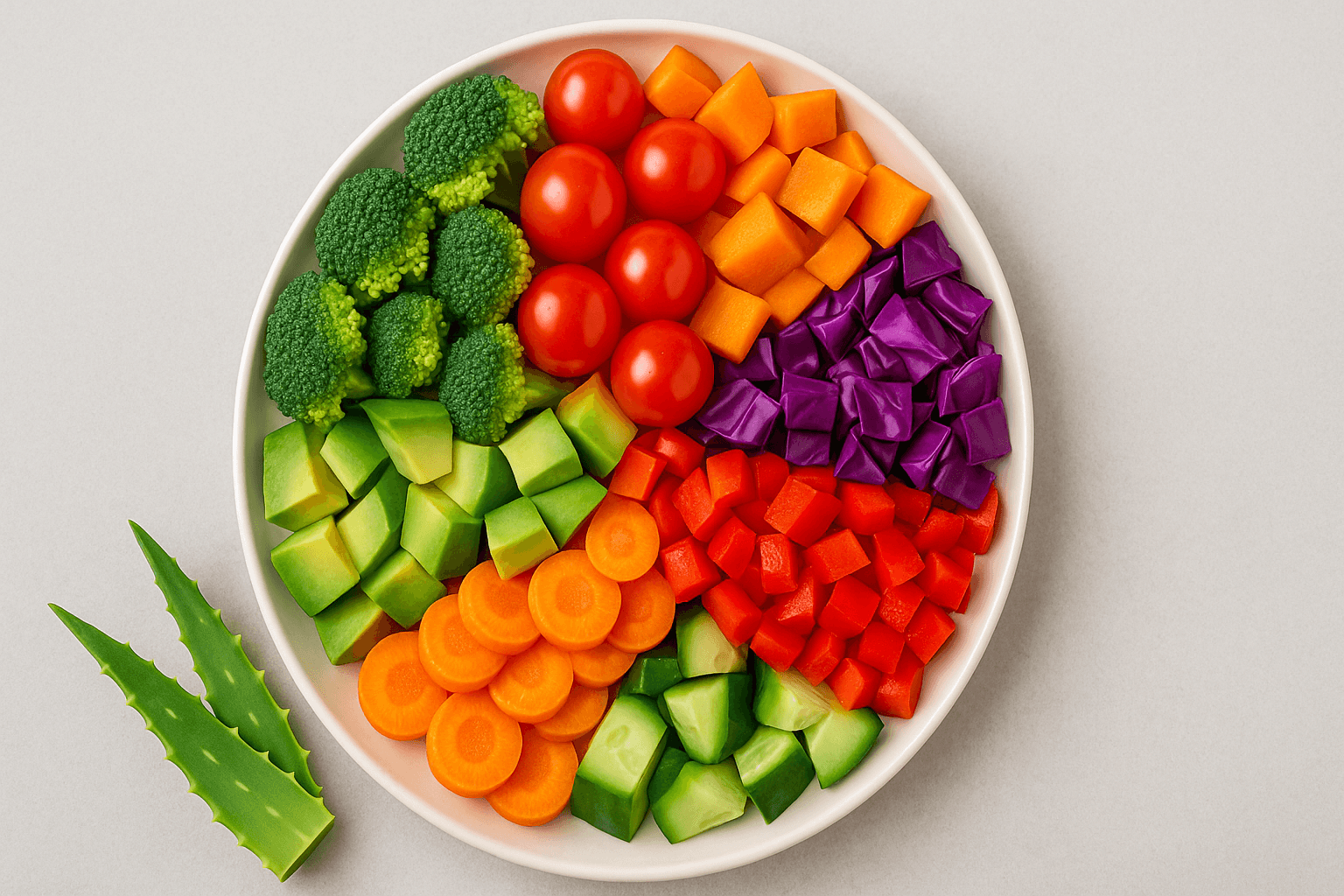
The advice is clear: at least five portions of fruit and vegetables a day, about 400 grams. One portion is roughly 80 grams, for example an apple, a handful of peas or a small bowl of salad.
A simple plan
- Breakfast: add berries, a banana or grated carrot to porridge, yoghurt or an omelette.
- Lunch: let vegetables, cooked or as salad, fill half your plate.
- Snack: fruit, or carrot or cucumber sticks with hummus.
- Dinner: add vegetables to soup, sauce or pasta.
What counts
Fresh, frozen, canned and dried fruit and vegetables all count. Beans, lentils and chickpeas count only once a day, however much you eat. Potatoes do not count, because they are a starchy food. Fruit juice and smoothies together count as one portion at most, and their combined total should stay within 150 ml a day, ideally with a meal.
Tips to start
Wash and cut vegetables in advance and keep them in a container where you can see it in the fridge. Frozen vegetables are a quick and cheap stock. Vary the colours, because different vegetables give different nutrients. Start with one extra portion a day, not all at once.
If you have a digestive condition or diabetes or take medicines, agree changes to your diet with a doctor or dietitian.
Weekly check
- On Sunday pick five kinds of fruit and vegetables for the week.
- Add one portion to every breakfast.
- In the evening count the portions you ate and make up a missing one tomorrow.
You do not need to be perfect every day. What matters is the habit over weeks.
Common questions
Does juice count as a portion?
Juice and smoothies together count as one portion a day at most, and the combined total should stay within 150 ml. Whole fruit is better.
Is frozen veg as good as fresh?
For this advice, yes. Frozen vegetables count as a portion and are practical and cheap.
Before first use
Choose products for your dietary routine and care needs. Follow a healthcare professional’s advice for diagnosis and treatment of symptoms. Check suitability first during pregnancy and for use by children.