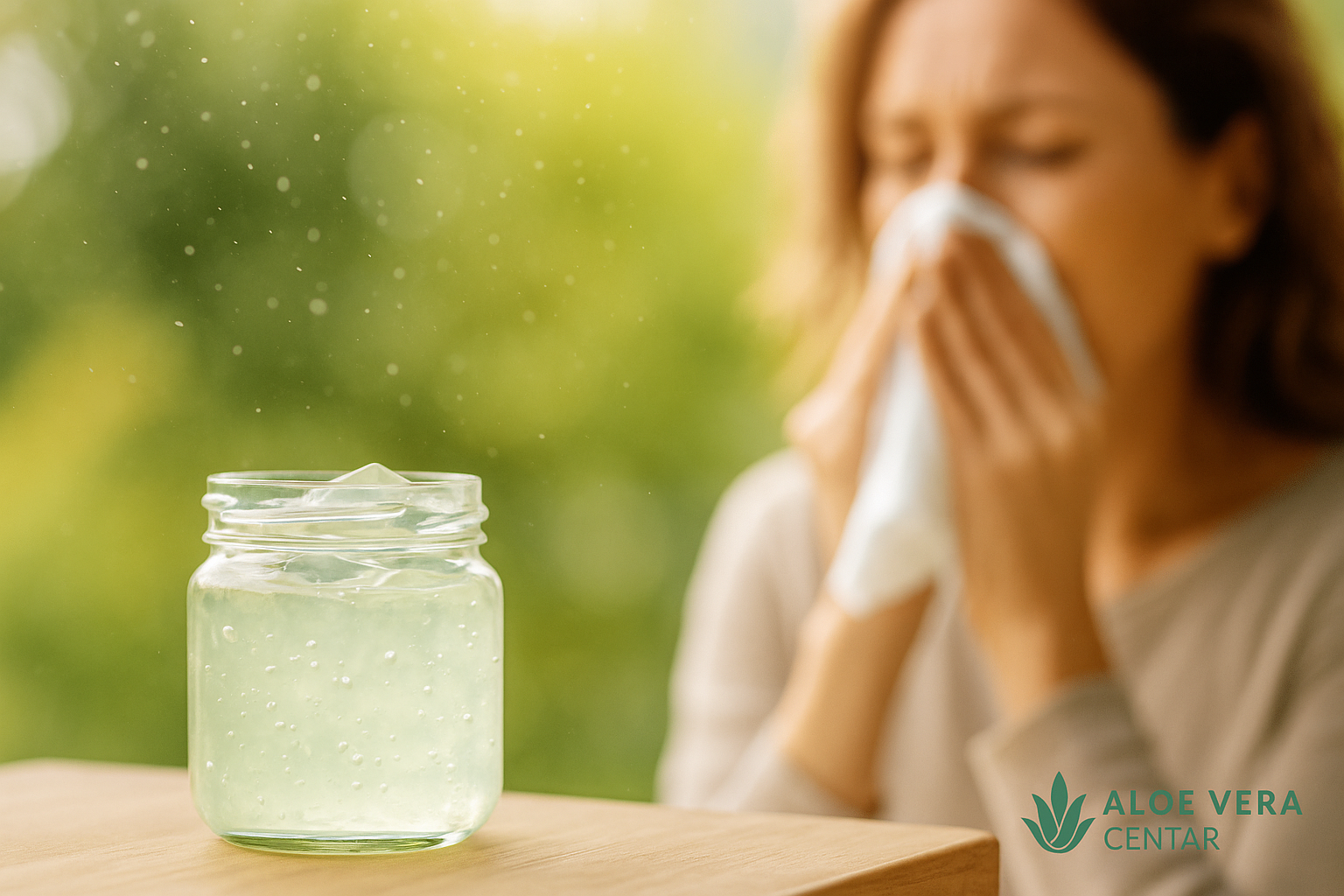
Seasonal sneezing, itchy eyes and a runny nose can suggest allergic rhinitis. Aloe vera is not an established replacement for an antihistamine or an appropriate nasal spray. Laboratory descriptions of anti inflammatory activity do not prove relief of pollen symptoms in people.
Plan lower exposure
Check the local pollen forecast and adjust outdoor time where practical. Change clothes and shower after returning, particularly before bed. Avoid drying bedding outside when pollen levels are high. Glasses can reduce direct contact between pollen and your eyes.
Tell a pharmacist which symptoms bother you most and how long they have lasted. Ask how to use the chosen medicine and whether it may cause drowsiness. Use a spray according to its instructions rather than only when you remember. If using saline spray or irrigation, follow that product’s hygiene instructions.
Keep cosmetics out of the nose and eyes
Cosmetic aloe gel, essential oils and oral aloe beverages are not eye or nasal rinses. Do not transfer them into spray bottles. A product tolerated on your arm can still irritate a mucous membrane.
Record symptom days, the pollen forecast and treatment used to help assess its effect. Wheezing, breathing difficulty or poorly controlled asthma call for medical advice. Sudden throat swelling and severe breathing difficulty need emergency help. Take the record to a review if the current treatment is not keeping symptoms manageable.
Common questions
Can I rinse my nose with aloe gel?
No. Use only products intended for nasal use.
When should I seek assessment?
For severe symptoms, breathing problems or insufficient benefit from correctly used treatment.
Before first use
Choose products for your dietary routine and care needs. Follow a healthcare professional’s advice for diagnosis and treatment of symptoms. Check suitability first during pregnancy and for use by children.