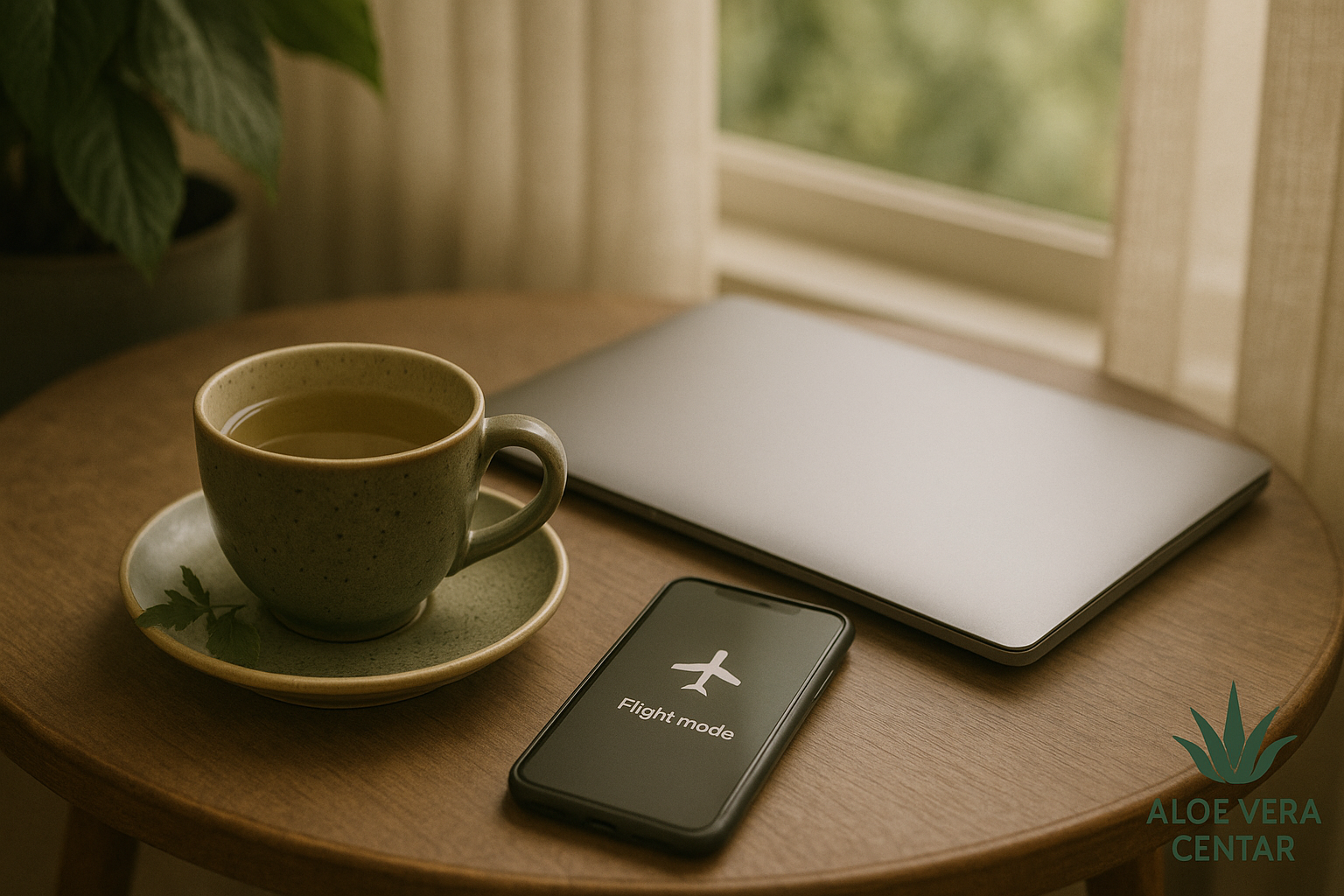
There is no exact number of hours that suits everyone. What matters is whether you use social media on purpose and whether it affects your sleep, mood and relationships. These are practical steps, not a diagnosis or treatment.
Measure and set limits
- Track your social media time for a week in your phone settings and note the average.
- Choose one or two times a day to check social media instead of constant checking.
- Turn off notifications for the apps that distract you most.
- Move the apps off your home screen or delete them for a while.
An evening without screens
The US Centers for Disease Control advise turning off electronic devices at least 30 minutes before bed, keeping the bedroom quiet, cool and relaxing and avoiding caffeine in the afternoon and evening. Charge your phone outside the bedroom.
Instead of scrolling, have a warm herbal drink. A herbal tea, such as Aloe Blossom Herbal Tea, can be compared by its ingredient list, and check the label for caffeine. It is just a pleasant ritual, not a sleep aid.
When to seek help
If social media leaves you constantly anxious or sad, you cannot sleep or your duties and relationships suffer, talk to a doctor or psychologist. For young people, parents should agree rules together with them.
For the first week choose one change: charge your phone overnight in another room or turn off notifications. In the second week add a fixed time for social media. Small changes are easier to keep.
Sources: CDC U.S. Surgeon General.
Common questions
How many hours a day is healthy?
There is no single number for everyone. Watch whether social media affects sleep, mood and duties, then adjust your limits.
Is a digital break suitable for children?
Yes, with clear rules that parents agree with the child and with adults setting an example.
Before first use
Choose products for your dietary routine and care needs. Follow a healthcare professional’s advice for diagnosis and treatment of symptoms. Check suitability first during pregnancy and for use by children.