In this guide
For information only. Products do not replace diagnosis, treatment or a varied diet. Seek professional advice for symptoms, pregnancy and use by children.
Migraine is a neurological condition, not just a bad headache. This text is general education: how to spot triggers, what helps during an attack and when to contact a doctor. It does not replace diagnosis or treatment.
What you can do
- Keep a diary: when the attack began, what you ate, how much you slept and what happened before.
- Eat at regular times and do not skip meals. Drink enough water.
- Limit caffeine and alcohol, sleep regularly and reduce stress.
- During an attack, rest in a quiet, darkened room.
- Take a painkiller as soon as an attack starts, as directed, but not on more than two days a week without agreeing with your doctor.
Magnesium and riboflavin
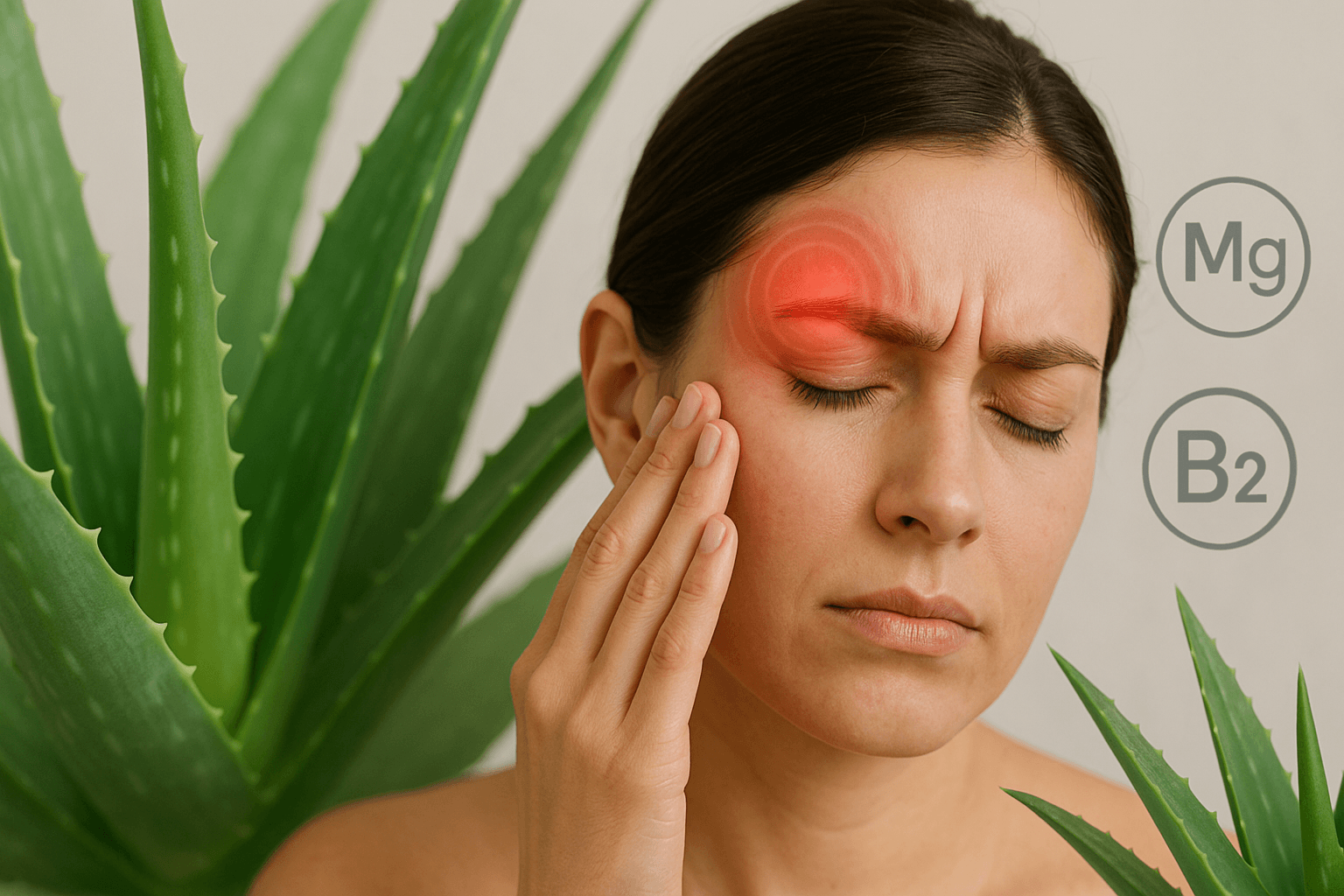
Research on magnesium and riboflavin for migraine is limited. Magnesium at the doses mentioned for migraine exceeds safe amounts and may only be taken under the supervision of a health professional, because it can affect medicines. There is no reliable evidence for aloe in migraine.
Emergency signs
Call emergency services at once for a sudden, very severe headache, trouble speaking, loss of vision, weakness on one side of the body, confusion, a seizure or after a head injury. If an attack lasts longer than 72 hours or aura lasts longer than an hour, contact a doctor urgently.
Preparing for the doctor
Bring your headache diary, a list of medicines and supplements you take, and your questions. Note how many attacks you have a month and how many days you take a painkiller.
Common questions
Can I take magnesium or riboflavin for migraine?
The evidence is limited. Magnesium at migraine doses may only be taken under the supervision of a health professional. Talk to your doctor first.
When does migraine need urgent care?
With a sudden very severe headache, trouble speaking, loss of vision, weakness on one side of the body, confusion, a seizure or after a head injury.