The key points from this article
- The air quality in the home directly affects your health, energy and mood during the day.
- The air in them is often saturated with moisture, dust, chemicals and allergens.
- For a personal choice, continue with a recommendation after reading.
Products most closely related to this topic
If you want to compare concrete options after reading, these products are the closest match to the article topic.
 Aloe Vera Gel
A daily aloe drink for people who want simple support for digestion and routine.
It makes sense if you are looking at the topic through digestion and a simpler daily routine. Forever Fiber - FIBER
A simple fiber add-on when you want digestion and satiety support during the day.
It fits topics such as appetite, portions, energy or a weight-management routine. Forever Argi+
A supplement for energy, heart and circulation routines when you want longer-term daily support.
Useful to compare when you are looking for energy, focus or vitality support.Air quality in the home: daily ventilation and filter protocol
The air quality in the home directly affects your health, energy and mood during the day.
We spend most of our time indoors. The air in them is often saturated with moisture, dust, chemicals and allergens. The result can be fatigue, headaches, irritation of the respiratory tract and more frequent infections.
You may be wondering why. Closed windows, lots of textiles, scented candles, cleaning products and cooking create a mixture of particles and gases. If the air is not renewed, you breathe it all day after day.
Here's the thing. You don't need a sterile home. You need a smart, simple daily protocol that keeps the air fresh and the strain on the body lower.
Why indoor air quality is essential for health
Research shows that the air in closed spaces can be significantly more polluted than outside. Poor air quality is associated with irritations of the respiratory system, allergies, poorer sleep and reduced concentration.
Symptoms are often very subtle. Dry mouth, scratchy throat, burning eyes, heaviness in the head or tiredness for no apparent reason. Many attribute it to stress, but in fact part of the problem comes from the air they breathe.
In children and the elderly, the consequences can be even more pronounced. Children have faster breathing and more sensitive airways. The elderly often have chronic diseases, so bad air puts an additional strain on the body.
The most common problems with air quality in the home
Dry air and irritated nasal mucosa
In winter, the heating dries out the air in the room. The mucous membrane of the nose and throat becomes more sensitive, is easily irritated and protects us less against viruses. If you often suffer from a dry or burning nose, see the mini-protocol forirritated nasal mucosa and try to apply a few simple habits.
Dryness intensifies at night. Then we breathe through the mouth, especially if the nose is blocked. That is why evening ventilation and light humidification of the space is an important part of every daily protocol.
Allergens, pollen and house dust
In the warmer part of the year, pollen and small particles from outside enter the home. At the same time, mites, pet hair and micro dust particles accumulate in the space. People who haveallergies in spring are particularly sensitive to this combination.
You may notice that your nose is blocked as soon as you lie down, even though everything seems tolerable during the day. This is because in the lying position, the air stays longer in the upper respiratory tract, and the particles remain on the mucous membrane.
Viruses, bacteria and flu season
In the season of infections, we spend more time indoors. We open the windows less often because we are cold. By doing so, we unwittingly increase the risk of virus transmission in the family. That is why it is useful to plan the home as a small"prevention zone", along with the habits described in the protocol forflu season.
Good ventilation does not mean that you will catch a cold more easily. On the contrary, shorter, targeted ventilation reduces the concentration of viruses and bacteria in the air.
Morning ventilation protocol
Morning is the ideal time to reset the air in the home. The temperature outside is often lower, and the traffic is not yet at its peak. This means less exhaust gases and more comfortable ventilation.
A practical morning protocol can look like this.
- Step 1: Immediately after waking up, fully open the windows in all rooms for 5 to 10 minutes.
- Step 2: At the same time, adjust the bed and spread the sheets a little to air them out.
- Step 3: If you live next to a busy road, ventilate briefly but intensively, just like"shock ventilation".
- Step 4: After closing the windows, turn on the air purifier if you have one and let it run for at least 30 to 60 minutes.
- Step 5: Drink a glass of water and briefly stretch your body. Quality air works best when you get moving.
You might think that you don't have time for all that. But most of these steps take place in parallel. While you brush your teeth or make coffee, the air in the apartment changes and refreshes.
Afternoon habits for cleaner air
In the afternoon, the space is burdened by the smells of cooking, steam and tiny drops of oil. If you rarely turn on the hood or the filter is dirty, it all ends up on the walls, fabrics and in the lungs.
Several habits can significantly reduce this burden.
- For stronger cooking, turn on the hood and open at least one window for micro ventilation.
- Avoid frying at high temperatures whenever possible.
- Choose cleaners with less aggressive odors and use the lowest effective amount.
- Dust regularly with a damp cloth instead of dry mopping, which raises particles into the air.
When cleaning surfaces, some people like to use products based on aloe or mild herbal ingredients. In this context, an overview of Frantibacterial and antifungal action of aloe, in order to better understand where natural ingredients make sense, and where classic disinfectants are still needed.
Evening protocol for the bedroom and a more restful sleep
Evening is the moment when the body enters regeneration. The air in the bedroom then plays a particularly important role. An overheated and stuffy room often means a more superficial sleep and waking up with a heavy head.
A good evening protocol can look like this.
- Air the room for 5 to 10 minutes at the latest one hour before going to bed.
- Lower the temperature in the room, ideally to 18 to 20 degrees.
- Get rid of candles and intense scents right before bed.
- Turn off the screen lights or at least dim them. You will find additional guidance in the guide for insomnia and late screens.
If your air is very dry, consider using a humidifier, but keep it clean. A dirty humidifier can grow mold and bacteria, negating any benefits.
Plants, natural solutions and aloe vera in the space
Plants can contribute to a better feeling in the space. They are not a magic filter, but they help create a more comfortable, relaxed home. They are particularly practical plants that tolerate a dry climate well and do not require much care.
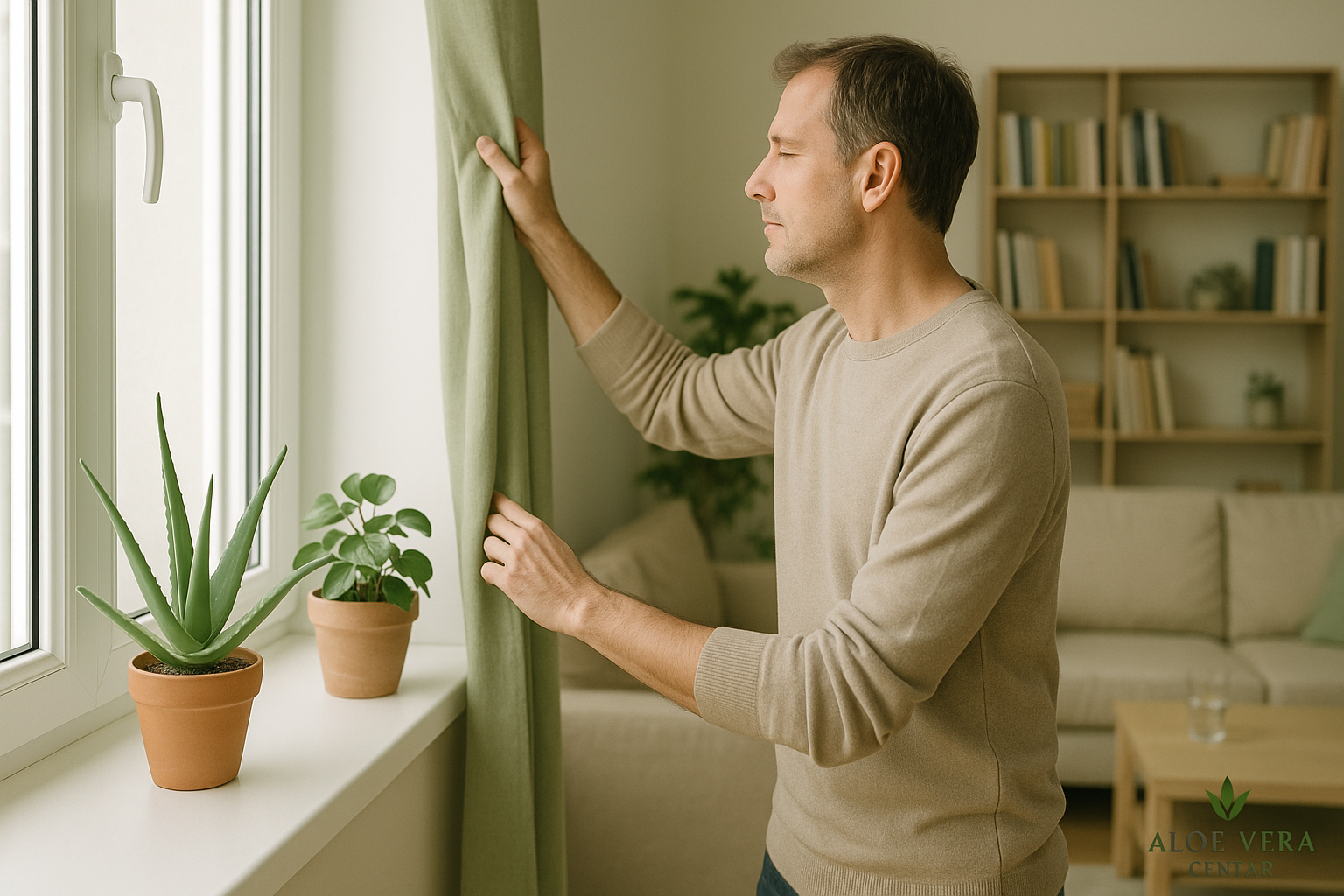
Aloe vera is a favorite of many precisely because it is easy to grow in an apartment. If you are wondering how to properly care for, water and safely use her gel, see the guide foraloe vera in the apartment. In this way, you combine aesthetics, practicality and the possibility of occasional local application of the gel on the skin.
A reminder. Plants are not a substitute for aeration and filters. They are a pleasant addition to the atmosphere and can help you experience the home as an oasis, and not as another"office".
Air Filters: What Really Makes a Difference
Ventilation is the basis, but in cities with traffic or for people with asthma, additional protection is needed. This is where air purifiers with HEPA filters, activated carbon filters or combined systems come in.
According to the guidelines of the US EPA, filters with a true HEPA standard can retain very fine particles. Additional information on the effect of filtering on health can be found in their guide onair cleaning devices.
When choosing a purifier, pay attention to several items.
- The size of the room that the device covers.
- Noise level during night work in the bedroom.
- Price and availability of replacement filters.
- Electricity consumption.
It may seem like a big investment. But if someone in the family has chronic respiratory problems, it can be an important part of a long-term health care plan.
The daily air quality protocol: a step-by-step summary
When you combine ventilation, filters and a few smart habits, you get a simple daily protocol. It fits into your schedule and doesn't require hours of extra time.
Morning
- Open windows in all rooms for 5 to 10 minutes.
- Let the bedding air out while you make the bed.
- Turn on the purifier if you live next to a busy road or have allergies.
Day
- Be sure to turn on the hood while cooking and open the window at least a little.
- Dust regularly with a damp cloth, especially in bedrooms.
- Do not overdo it with scented candles and air fresheners.
Evening
- Briefly ventilate the bedroom before going to bed.
- Reduce the temperature to a comfortable 18 to 20 degrees.
- Turn off strong sources of artificial light and screens whenever you can.
When the immune system is burdened by frequent colds or allergies, it is worth considering additional support. After talking with a doctor, some choose immune products such asForever Immublend, as part of a broader concern about air quality, sleep and nutrition.
For the general hydration of the body and proper digestion, regular intake of liquids, vegetables and fibers helps many people. In this context, some people also use aloe-based drinks, such as productsForever Aloe Vera Gel, with consultation with a doctor and attention to individual tolerance.
How to make your choice easier: technology as an ally
Choosing between cleansers, moisturizers and supplements can quickly become confusing. Different models, marketing messages and contradictory advice can tire even the most patient.
A smart tool that combines information about your habits, complaints and goals can help here. If you want personalized product and routine suggestions, you canuse our AI advisor which, based on your answers, suggests steps and products adapted to your situation.
Air quality in the home in the wider context of health
Air quality does not act in isolation. It combines with sleep, diet, stress and overall lifestyle. Long-term stress, poor sleep and lack of movement put an additional burden on the body, which is already struggling with particles in the air.
It is important to look at the bigger picture. In addition to taking care of the air, it is also worth going through your daily habits, exposure to screens, diet and rest. By doing so, you build a more resilient body that better withstands occasional"blows"from the environment.
For a deeper understanding of how different factors affect the airways and immunity, you can also refer to review articles on PubMed on ventilation and the incidence of respiratory infections, such as this short review onventilation and the risk of transmission of infections.
Frequently asked questions
How often should I ventilate the apartment in winter?
Several shorter ventilations during the day are better than one long period. For example, three times a day for 5 to 10 minutes. That way, you won't cool down the room too much, and the air will be renewed regularly.
Are air purifiers necessary if I ventilate regularly?
For a healthy person in a less polluted area, ventilation is often sufficient. Purifiers become important with allergies, asthma, or living next to a busy road. Then they can significantly reduce the load of fine particles.
What is the ideal humidity level in the home?
Most people are comfortable with a relative humidity between 40 and 60 percent. Lower humidity dries out the mucous membrane, and higher humidity favors mold. A simple hygrometer is often enough to get an idea of where you are at the moment.
Can bad air worsen existing respiratory problems?
Yes. People with asthma, chronic bronchitis or a tendency to sinusitis often notice aggravation in stuffy, dusty spaces. This is precisely why the combination of ventilation, filters and careful care of the mucous membrane is so important.
For inspiration on how modern technology and AI are used to build a global online business, read the article"How this couple is building a global business with AI and working 95% online".
Note: This text is for informational purposes and is not a substitute for medical advice. If you have chronic respiratory conditions, more severe symptoms, or are taking medication, be sure to consult a doctor or other health professional before making major changes to your routine, dietary supplements, or using new devices.
Products most closely related to this topic
If you want to compare concrete options after reading, these products are the closest match to the article topic.
Aloe Vera GelA daily aloe drink for people who want simple support for digestion and routine.
It makes sense if you are looking at the topic through digestion and a simpler daily routine.Forever Fiber - FIBERA simple fiber add-on when you want digestion and satiety support during the day.
It fits topics such as appetite, portions, energy or a weight-management routine.Forever Argi+A supplement for energy, heart and circulation routines when you want longer-term daily support.
Useful to compare when you are looking for energy, focus or vitality support.Short answers that help
If you are still comparing options, these are the points worth checking before you continue.
What should I take from this article?
Use it to understand the topic in practical terms and compare it with your current routine, needs and next step.
When does it make sense to ask for a recommendation?
Ask when the topic feels relevant, but you are not sure which Forever Living Products product or routine fits you best.
Does this article replace professional advice?
Air quality in the home: ventilation protocol for healthier breathing is educational content. For medical conditions, medication, pregnancy or persistent symptoms, include qualified professional advice.
Describe what you want to achieve
If you do not know which product to choose, write your goal, habits or doubts and get a more concrete suggestion.
Recommended products


Related articles to keep exploring