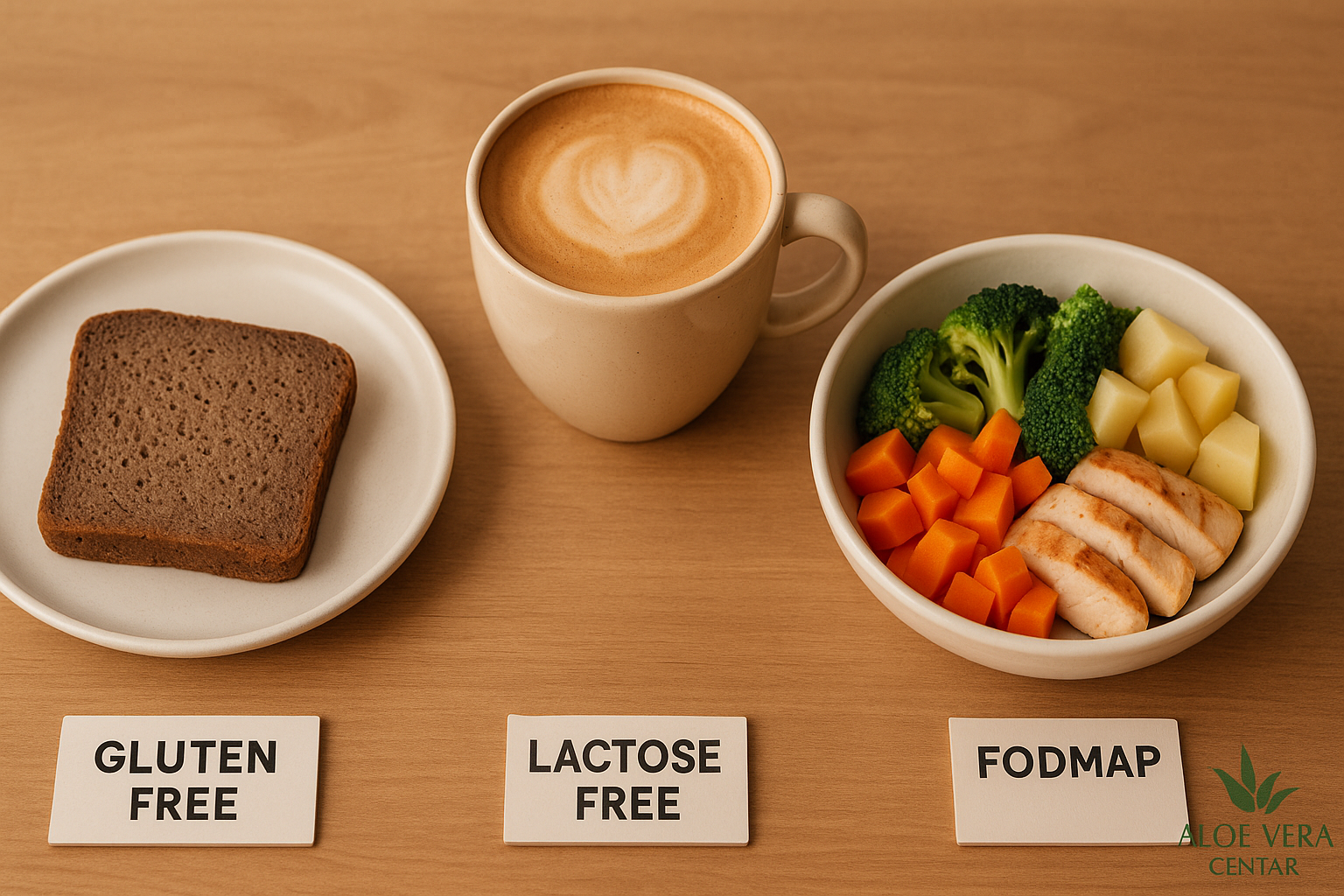
Food allergy, coeliac disease and lactose intolerance are different diagnoses. The same four week food removal and reintroduction plan is therefore unsuitable for everyone. Do not deliberately repeat a suspected allergic reaction at home.
Three important distinctions
Gluten matters medically in coeliac disease, but removing it before tests can make diagnosis more difficult. Arrange assessment first. Lactose intolerance concerns milk sugar, so lactose free products are still not safe substitutes for milk protein allergy.
A low FODMAP approach addresses particular digestive symptoms, especially with IBS. It involves structured reintroduction and personalisation rather than a lifelong ban list or food allergy treatment.
A practical start
Record food, quantities and symptoms, then arrange a clinician or dietitian discussion. Difficulty breathing, tongue swelling or collapse after food calls for immediate action according to an allergy plan and emergency assistance. Fibre or probiotic supplements do not protect against an allergic reaction. Avoid multiplying dietary restrictions while waiting for appropriate advice.
Prepare a short record of the food, symptom timing and duration for assessment. Photograph the suspected food label and note any rash, swelling or breathing difficulty. Do not perform your own food challenge following a possible allergic reaction. If coeliac testing is planned, ask before changing gluten intake so that diet changes do not make the results harder to interpret or delay a clear diagnosis.
Sources: NIDDK Monash University.
Common questions
Does low FODMAP treat food allergy?
No. It is a separate dietary approach for particular digestive symptoms.
Does lactose free mean milk protein free?
No. These labels describe different ingredients and risks.
Before first use
Choose products for your dietary routine and care needs. Follow a healthcare professional’s advice for diagnosis and treatment of symptoms. Check suitability first during pregnancy and for use by children.