Honey, pollen, propolis and royal jelly are different products. Honey is a sweetening food, pollen is plant material bees collect, propolis is resinous, and royal jelly is a bee secretion used within the colony. Their role in a hive does not establish treatment of human disease.
Choose by the actual format
Before buying, ask whether you want food, a supplement or cosmetics. Do not turn tablets into wound preparations or use a cream for the throat. Natural origin does not exclude an allergic reaction.
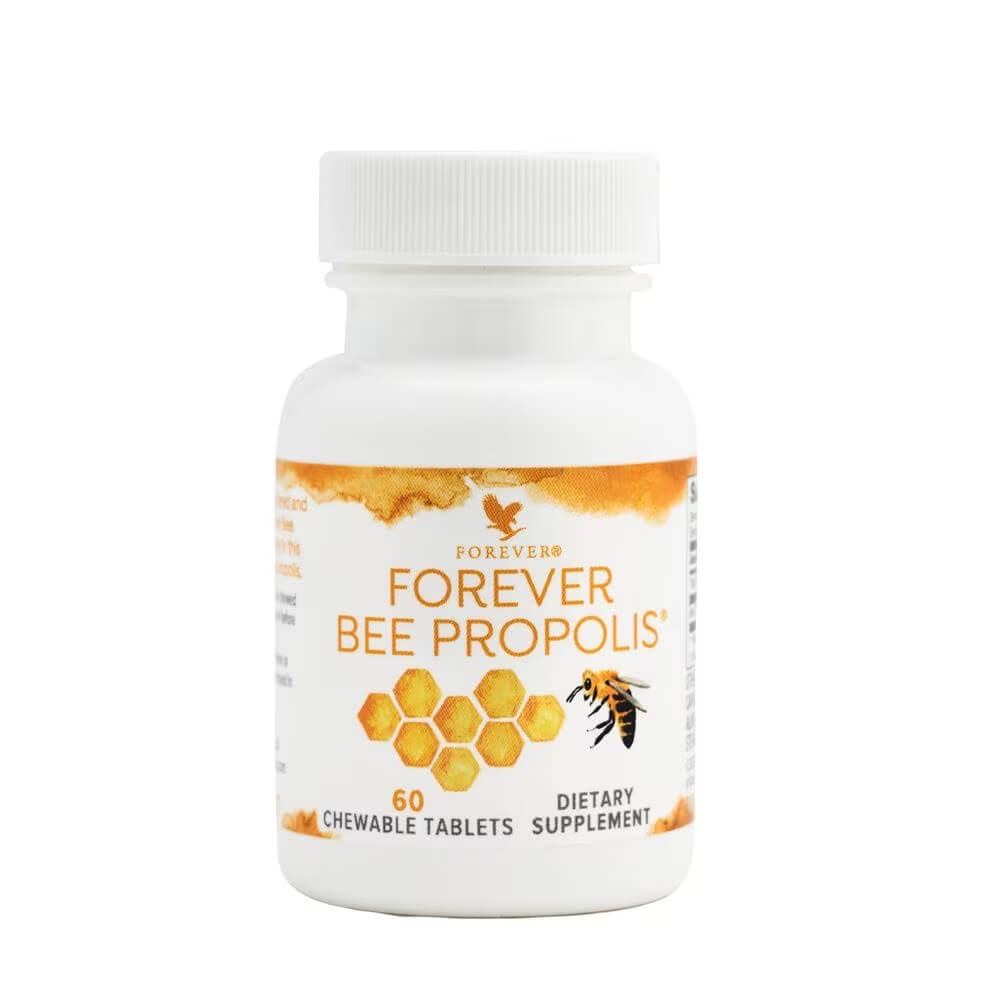
You can compare Forever Bee Propolis if you want a propolis supplement in chewable tablets rather than liquid drops. The finished format makes labelled amounts and directions convenient to follow. The checked Bosnia and Herzegovina description requires chewing before swallowing and lists bee ingredients, soy and almond. Read the complete current label for your own country.
- Check every bee ingredient, not only the one in the name.
- Compare format, amount, storage and expiry date.
- Do not combine several bee supplements because of promises about synergy, immunity or hormone balance.
Propolis can cause allergy, and royal jelly can cause severe reactions, particularly with asthma or allergies. Do not test tolerance with a small dose at home. For pregnancy, breastfeeding, children or medicines, obtain professional assessment first. Mouth or throat swelling and breathing difficulty need emergency help. Supplements do not replace antibiotics, allergy treatment or assessment of persistent tiredness.
Sources: Forever Living TGA.
Common questions
Are all bee products interchangeable?
No. Food, supplements and cosmetics have different purposes and directions.
Should I combine pollen, propolis and royal jelly?
Not automatically. More products do not establish greater benefit or safety.
Before first use
Choose products for your dietary routine and care needs. Follow a healthcare professional’s advice for diagnosis and treatment of symptoms. Check suitability first during pregnancy and for use by children.